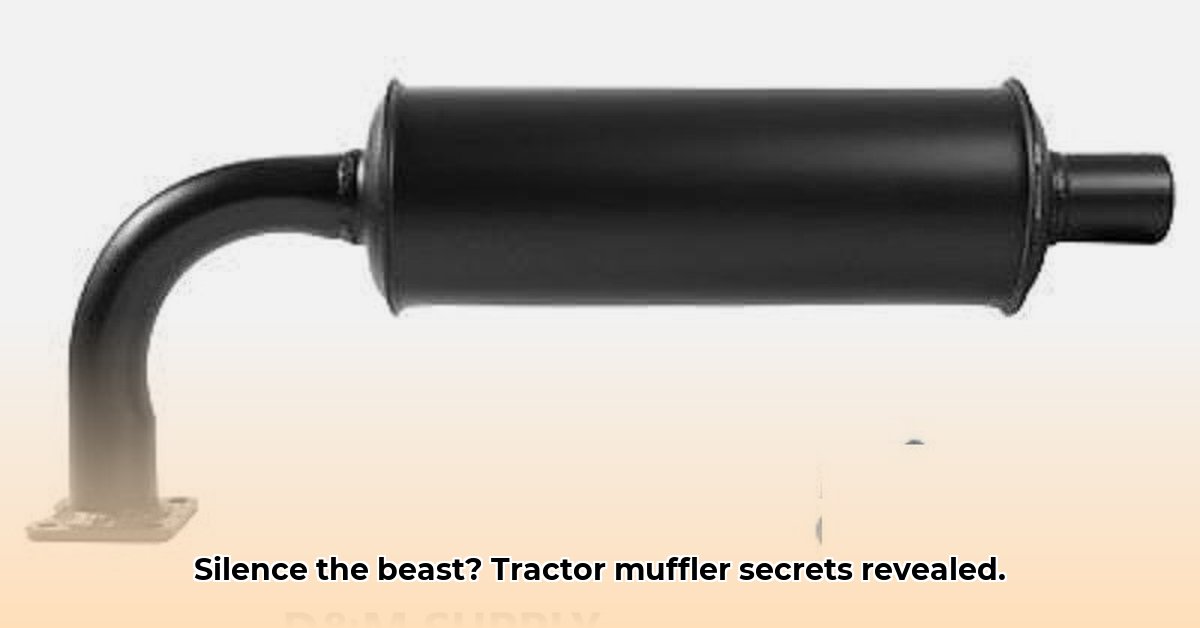
Tractor Muffler Tractor Supply: Your Guide to Quieter, Greener Farming
Sustainable farming practices are increasingly important. Tractors, essential tools in agriculture, contribute to emissions. However, a simple component, the tractor muffler, plays a significant role in reducing this environmental impact. For more muffler options, check out this helpful resource. This guide provides actionable steps for selecting and maintaining effective tractor mufflers, contributing to quieter and more environmentally responsible farming.
Understanding Your Tractor's Exhaust System: It's More Than Just Noise
A tractor's exhaust system removes hot gases from the engine. The muffler is the key component that controls both noise and pollution. Many modern mufflers include catalytic converters (devices that further reduce pollutants through chemical reactions) for enhanced emission control. Understanding this system is crucial for effective maintenance and upgrades. A well-maintained system improves air quality and reduces noise pollution, benefiting the farmer, neighbors, and the environment.
The Importance of a Top-Notch Tractor Muffler
A functioning muffler is vital for environmentally responsible farming. A worn muffler allows more pollutants to escape, negatively impacting air quality and the surrounding community. Replacing it with a high-quality muffler is a significant step towards long-term sustainability. While a new muffler represents an initial expense, the improved fuel efficiency from a well-maintained exhaust system often yields long-term cost savings. Cleaner air also contributes to healthier crops and a more pleasant working environment. Isn't a healthier environment and cost savings worth the investment?
Finding the Perfect Muffler at Your Tractor Supply: It's Easier Than You Think
Selecting the right muffler involves considering several factors. You’ll need to know your tractor's make and model. Your local tractor supply store is an invaluable resource; their staff can help match the appropriate parts to your tractor. When making your selection, consider the muffler's material (stainless steel offers superior durability), noise reduction capabilities (decibel ratings are helpful indicators), and features like spark arrestors (essential safety components that prevent fires).
Replacing Your Tractor Muffler: A Step-by-Step Guide
Replacing a muffler is manageable, but safety is paramount.
Step 1: Prioritize Safety! Always turn off and allow the tractor to cool completely before starting. Disconnect the battery's negative terminal to prevent accidental starts. This is a non-negotiable safety precaution.
Step 2: Gather Your Tools. A new muffler, appropriate wrenches, potentially jack stands for easier access, sturdy gloves, and safety glasses are essential. Safety glasses protect your eyes from flying debris.
Step 3: Access the Muffler. Locate the muffler underneath your tractor. You might need to remove other components for access. Refer to your tractor's manual for detailed instructions.
Step 4: Careful Removal. Carefully loosen and remove the old muffler. Use a container to collect any fluids or debris. Penetrating oil may be necessary for older, stubborn components.
Step 5: Install the New Muffler. Securely attach the new muffler, ensuring all connections are tight but not over-tightened (to prevent damage).
Step 6: Reconnect Exhaust Pipes. Reconnect the exhaust pipes, ensuring a leak-free seal. Leaks can compromise safety and fuel efficiency. Even small leaks require attention.
Step 7: Battery Reconnection. Safely reconnect the battery's negative terminal.
Step 8: Leak Check. Start the tractor and check the new muffler installation for any leaks. A thorough inspection is crucial.
Weighing Your Options: Different Muffler Types
Choosing between muffler types can be challenging. Here's a comparison:
| Muffler Type | Pros | Cons |
|---|---|---|
| Standard Muffler | Affordable, readily available | May not provide superior noise reduction or emissions control |
| Heavy-Duty Muffler | Durable, offers better noise reduction | Higher initial cost |
| Muffler with Catalytic Converter | Significantly reduces emissions | Higher price; the catalytic converter has a limited lifespan |
Consult your local tractor supply store for personalized advice on the best muffler for your specific needs and budget. Their expertise ensures you make an informed decision.
How to perform a lifecycle assessment of sustainable agricultural machinery emissions
Key Takeaways:
- Minimizing emissions from agricultural machinery is crucial for sustainable farming.
- Tractor mufflers significantly contribute to reducing harmful exhaust.
- A lifecycle assessment (LCA) evaluates the environmental impact across the machine's entire lifespan (manufacturing, use, and disposal).
- Equipment selection and maintenance are key to minimizing environmental impact.
Understanding Tractor Mufflers and Their Role
Modern tractor mufflers, often equipped with catalytic converters, are crucial for environmental responsibility. They filter exhaust pollutants before releasing them into the atmosphere. But how significant is their impact? Let's delve deeper.
The Lifecycle Assessment Approach
Performing an LCA for agricultural machinery requires a comprehensive approach considering:
Manufacturing: The energy consumption and raw materials used in tractor production contribute to emissions.
Usage: This phase focuses on operational emissions, heavily influenced by the muffler's effectiveness and fuel efficiency.
Disposal: The end-of-life environmental impact of the tractor, including recycling practices, must be considered.
A complete LCA quantifies these contributions to determine the overall environmental footprint.
Assessing Muffler Effectiveness
Several factors determine a muffler's effectiveness:
Emission Reduction: Look for data on its pollution reduction capabilities (particulate matter, nitrogen oxides, carbon monoxide).
Durability: A durable muffler reduces the need for frequent replacements, minimizing manufacturing impacts.
Maintenance: Easy maintenance ensures optimal performance and longevity.
Investing in a high-quality, durable muffler with proven emission reduction capabilities is a worthwhile step towards sustainability.
Beyond the Muffler: Optimizing the Whole System
Reducing emissions requires a holistic approach:
Engine Technology: Employ fuel-efficient, low-emission engines.
Operational Practices: Optimize farming practices (e.g., minimize idling).
Maintenance: Regular maintenance is essential for fuel efficiency and emission reduction.
The tractor muffler is a critical component within a larger system.
Making Informed Choices
Sustainable practices are vital for modern farmers. By considering the lifecycle impacts of their equipment and conducting LCAs, farmers significantly improve their environmental performance. Remember, small changes can make a big difference.